
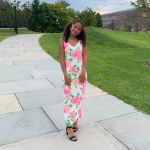
 Hi, I’m Eliana Lewis from New Jersey! I was born with hearing loss and have used hearing aids since I was diagnosed, which has definitely changed my outlook on the world. I am 16 years old and am currently a junior at The Pennington School in Pennington, N.J. This year is my first year of being involved with AG Bell and contributing to their Young Leaders Board, and I can’t wait to see where this journey leads me! I am thrilled to introduce you to my mom, Teresa.
 Hi, my name is Teresa Lewis and I currently live in New Jersey. I am the proud mother to two amazing children born hard of hearing. Although I have lived this journey with both of them every step of the way, ultimately, they are the ones who have learned to navigate the world around them, uniquely and differently, and both have flourished into intelligent and well-adapted teenagers who can become and do anything they wish to do.
Early Diagnosis and Initial Reactions
How and when did you realize that your children were hard of hearing?
I realize my first child was hard of hearing at about the age of 3 when he was able to express himself and ask for the television to increase in volume repeatedly.
What were your initial reactions and feelings upon receiving the diagnosis for each child and how did you take your first steps to address it?
My initial reactions after diagnosis were fear of the unknown and guilt thinking I could have done more, sooner.
Challenges Faced
What were some of the biggest challenges you faced in the early years of your children’s lives regarding their hearing loss?
One of the biggest challenges was the stigma of wearing hearing aids and explaining to everyone why.
Were there any particular incidents that stood out to you during your journey?
One of the most common incidents during my journey was the reactions of other children. Out of curiosity, many would want to touch the hearing aids and even remove them to see them.
Seeking Help and Support
Did you seek out any special programs or therapies for your children, and how did it impact them?
I was fortunate to live in New York City with many resources for both parents and children diagnosed with hearing loss. I sought speech therapy as one of those resources to help fill any gap in the early learning stages of developing spoken language.
How did friends, family, and others respond to your children’s needs, and how did you advocate for them?
Friends and family responded similarly to most with fear of the unknown and questions. Nonetheless they offered love and support. Thankfully, I was able to properly inform them because of the information and resources available to me as a parent.
Education and Social Development
How did you approach your children’s education, and what accommodations were necessary in school settings?
Finding the right school is among the most important, initial decisions a parent will make in the journey of a hard-of-hearing child. I selected a small learning environment and teachers and faculty that were willing to put in place proper accommodations, such as seating arrangements and the use of FM devices. Both of these helped immensely.
How have your children managed social interactions and friendships, and what strategies have been effective in supporting their social development?
My children have navigated their social interactions and friendships as a learning process. With time and experience, they were able to feel more comfortable in addressing questions and advocating for themselves in the face of unkindness.
Reflections
How have your children adapted to using hearing aids growing up all of these years?
My children have adapted to using hearing aids as anyone would to using something they need in order to properly function daily. It is part of who they are and they understand the importance in their everyday lives.
Looking back, what do you think were the key factors that helped your family navigate your journey successfully?
The most important factors that helped when navigating this journey were the resources available in my city and health care providers who could answer questions and guide me in the appropriate direction during such a difficult time.
What advice would you give to other parents who are just starting out on a similar journey?
Seek the many resources available both on the Internet and through support networks, such as other parents for guidance. The more you learn initially, especially when getting your child aided, the more you can implement for your child early on, which can make a huge difference in learning listening and spoken language.
Finally, what message would you like to share with the broader community about supporting and understanding children and people who are hard of hearing?
First and foremost is to educate yourself in this area. There is an immense amount of information now readily available that was not available 15 years ago. Understanding the diagnosis is the first step in understanding children and adults who navigate the world with unique challenges, but they are smart and can do anything with the right support.
For more stories like this, follow AG Bell’s Young Leaders Board on their Instagram page.
La perspectiva de una madre: la crianza de dos niños con pérdida auditiva
¡Hola, soy Eliana Lewis y vivo en Nueva Jersey! Tengo una pérdida auditiva de nacimiento y utilizo audífonos desde el diagnóstico, lo que sin duda representa un cambio en mi forma de ver el mundo. Tengo 16 años y estudio el penúltimo curso en The Pennington School de Pennington, Nueva Jersey. Este año es el primero que participo en AG Bell y colaboro con su Junta de Jóvenes Líderes, por lo que me muero de impaciencia por vivir la experiencia. A continuación, tengo el gusto de presentarles a Teresa, mi madre.
Hola, me llamo Teresa Lewis y vivo actualmente en Nueva Jersey. Tengo el orgullo de ser la madre de dos hijos maravillosos que nacieron con hipoacusia. Si bien los he acompañado en cada paso del camino, en último término son ellos los que han aprendido a desenvolverse en el mundo en que viven de una forma única y diferente, y se han convertido en adolescentes inteligentes y bien adaptados que pueden llegar a ser y hacer todo lo que se propongan.
Diagnóstico precoz y reacciones iniciales
¿Cómo y cuándo se dio cuenta de que sus hijos tenían hipoacusia?
Me di cuenta de que mi hijo mayor tenía hipoacusia cuando tenía unos 3 años, cuando fue capaz de expresarse y pedir repetidamente que subiéramos el volumen del televisor.
¿Cuáles fueron sus reacciones y sentimientos iniciales al recibir el diagnóstico de cada uno de sus hijos y cuáles fueron los primeros pasos para abordarlo?
Mis reacciones iniciales después del diagnóstico fueron el miedo a lo desconocido y la culpabilidad al pensar que podría haber hecho más y antes.
Los retos
¿Cuáles fueron los mayores retos a los que tuvo que enfrentarse en los primeros años de vida de sus hijos en relación con su pérdida auditiva?
Uno de los mayores retos fue el estigma de utilizar audífonos y tener que explicar el motivo a todo el mundo.
¿Hubo algún incidente en especial que le llamara la atención durante todo este proceso?
Uno de los incidentes más frecuentes fueron las reacciones de otros niños. Por curiosidad, muchos querían tocar los audífonos e incluso quitárselos para verlos de cerca.
Búsqueda de ayuda y apoyo
¿Tuvo acceso a algún programa o terapia especial para sus hijos y cómo les afectó?
Tuve la suerte de vivir en Nueva York, donde existen numerosos recursos tanto para los padres como para los niños con pérdida auditiva. Uno de estos recursos era la fonoaudiología, que fue una gran ayuda en las primeras etapas de aprendizaje del desarrollo del lenguaje hablado.
¿Cómo respondieron sus amigos, familiares y otras personas a las necesidades de sus hijos? ¿Cómo las abordó?
Los amigos y familiares respondieron de una manera similar a otras personas, con miedo a lo desconocido y preguntas. No obstante, ofrecieron su cariño y apoyo. Afortunadamente, pude informarles adecuadamente gracias a la información y los recursos de que disponía como progenitora.
Educación y desarrollo social
¿Cómo enfocó la educación de sus hijos y qué adaptaciones fueron necesarias en el entorno escolar?
Determinar cuál es la escuela más adecuada es una de las decisiones iniciales más importantes que deben tomar los padres de un niño con hipoacusia. En mi caso, elegí un entorno de aprendizaje reducido y maestros dispuestos a realizar las adaptaciones adecuadas, como la disposición de los asientos y el uso de dispositivos FM, lo que supuso una grandísima ayuda
¿Cómo han gestionado sus hijos las interacciones sociales y las amistades, y qué estrategias han sido eficaces para su desarrollo social?
Mis hijos han afrontado las interacciones sociales y las amistades como un proceso de aprendizaje. Con el tiempo y la experiencia, han aprendido a plantear preguntas y a defender sus intereses cuando se encuentran en una situación de falta de comprensión o amabilidad.
Reflexiones
¿Cómo se han adaptado sus hijos al uso de audífonos durante todos estos años?
Se han adaptado al uso de audífonos como cualquiera lo haría a algo que necesita para desenvolverse en el día a día. Forma parte de lo que son y entienden la importancia que tienen en su vida diaria.
Echando la vista atrás, ¿qué factores cree que fueron los más importantes para que se desenvolvieran con éxito?
Los factores más importantes en este proceso fueron los recursos disponibles en mi ciudad y los profesionales sanitarios que podían responder a mis preguntas y guiarme en la dirección adecuada en un momento tan difícil.
¿Qué consejo daría a otros progenitores que están iniciando un proceso similar?
Que busquen entre los numerosos recursos que existen disponibles tanto en Internet como a través de redes de apoyo, por ejemplo, otros progenitores que les orienten. Cuanto más aprendan al principio, sobre todo a la hora de conseguir ayuda para el niño y que se implemente lo antes posible, puede suponer una gran diferencia en el aprendizaje de la escucha y el lenguaje hablado.
Por último, ¿qué mensaje le gustaría compartir con la comunidad en general sobre el apoyo y la comprensión de los niños y las personas con hipoacusia?
Lo primero y más importante es aprender todo lo posible en esta área. Hoy en día, existe una cantidad enorme de información que no estaba disponible hace 15 años. Comprender el diagnóstico es el primer paso para entender a los niños y adultos que se desenvuelven en el mundo con unos retos únicos, pero que son inteligentes y pueden hacer todo lo que se propongan con el apoyo adecuado.
Si desea conocer más relatos como este, siga a la Young Leaders Board (Junta de Jóvenes Líderes) de AG Bell en su página de Instagram.
