
Development of speech sounds is integral to oral reading fluency and speech intelligibility. Part 2 focuses on developing strategies for focusing on a specific sound despite background noise. (Read Part 1 here.)
Auditory Figure Ground refers to the ability to focus on a particular sound despite other sounds present in the background. It allows us to concentrate on a specific voice or sound while ignoring other auditory distractions. For instance, in a noisy classroom, we can use auditory figure ground skills to focus on the teacher’s voice and filter out other sounds.
In my personal experience, auditory figure ground is the most difficult compensatory skill to refine. Many of us with hearing loss reach a plateau as a result of the configuration or severity of our hearing loss across the specific frequencies of speech. Therefore, listening in noise and focusing on acoustic information in noisy environments or watching TV, where it is more difficult to speech read, creates unfavorable situations where those of us that have a hearing loss are utilizing repair strategies more frequently. At some point, the signal-to-noise ratio will get to a point and our capacity to perform auditory figure ground tasks will become non-existent. This is why it is crucial to utilize FM, remote microphone, and captioning technology so that those of us with hearing loss have better accessibility in situations where there will be a lot of background noise, such as in a restaurant, in the car, or in a classroom.
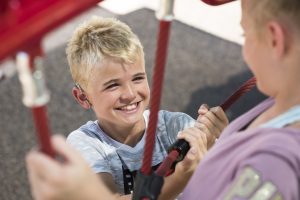 People who are deaf or hard of hearing often develop compensatory skills to help them better understand and communicate with others. These skills typically develop on their own as individuals encounter difficulties within their day-to-day lives and routines.
These skills include:
- Speech reading: By observing a speaker’s lip movements, individuals can understand speech better even if they are unable to hear all the sounds clearly.
- Visual cues: Non-verbal cues, such as facial expressions, gestures, and body language, can provide additional information to support understanding in conversations.
- Contextual clues: By paying close attention to the context of a conversation, individuals can make educated guesses about the content of the conversation even if they miss some auditory information.
To develop auditory figure ground skills, it takes real-life practice or the use of captioning, FM, or remote microphone technology to reduce the signal-to-noise ratio to improve the listening situation. This skill is important in everyday situations where there might be distractions or multiple sound sources. It’s like finding a specific tune in a sea of different melodies.
What might this look like in a classroom? Imagine you and your friend are having a conversation in a classroom full of other students talking and shuffling around. To practice auditory figure ground tasks, you need to focus on your friend’s voice while filtering out the other noises. It’s like zooming in on their voice and ignoring everything else happening in the background. This can be practiced in the cafeteria by identifying a teacher’s instructions in a chatty lunch room. Picture yourself sitting in a crowded cafeteria during lunchtime. Amidst all the chatter and noise, your teacher starts giving important instructions. To practice auditory figure ground tasks, you must concentrate on your teacher’s voice and understand their instructions, even though there are many other conversations going on around you.
What if you play sports like soccer and are required to follow directions during a soccer game? Imagine you’re playing soccer with your teammates, and your coach calls out instructions to the whole team. Despite the noise of the crowd, other players, and the ball bouncing around, you need to focus on your coach’s voice to understand the directions and make the right moves. Practicing auditory figure ground tasks is like honing your ability to zero in on important auditory cues even when there are distracting sounds happening at the same time.
Compensating for hearing loss requires developing many interrelated auditory skills. Incorporating ways to help a child practice auditory association, auditory discrimination, auditory memory, auditory closure, and auditory figure ground tasks can help strengthen compensatory strategies for building listening skills in turn allowing them a way to enhance auditory skills that directly impact their oral fluency and speech intelligibility.
Jennifer Shell lives in Texas. An educator of the deaf for 20+years, she also has a genetic hearing loss. She is the Deaf Educator for the Hill Country Special Education Co-op servicing the rural districts of Doss ISD, Harper ISD, Comfort ISD, and Fredericksburg ISD.
Desarrollo de habilidades para compensar una pérdida auditiva y desenvolverse con éxito
El desarrollo de los sonidos del habla es fundamental para la fluidez de la lectura oral y la inteligibilidad del habla. La Parte 2 se centra en el desarrollo de estrategias para centrarse en un sonido específico a pesar del ruido de fondo. (Lea la Parte 1 aquí).
La Discriminación figura-fondo auditiva se refiere a la capacidad de centrarse en un sonido concreto a pesar de que haya otros sonidos de fondo. Nos permite centrarnos en una voz o en un sonido concretos ignorando otras distracciones auditivas. Por ejemplo, en una clase ruidosa, podemos utilizar la capacidad de discriminación figura-fondo auditiva para centrarnos en la voz del maestro y filtrar otros sonidos
En mi experiencia personal, la discriminación figura-fondo auditiva es la habilidad compensatoria más difícil de perfeccionar. Muchas de las personas que tenemos una pérdida auditiva alcanzamos una meseta como resultado de la configuración o la severidad de esta pérdida en las frecuencias específicas del habla. Por lo tanto, cuando escuchamos en presencia de ruido y nos centramos en la información acústica en entornos ruidosos o vemos la televisión, donde es más difícil leer el habla, se crean situaciones desfavorables en las que debemos utilizar estrategias de reparación con más frecuencia. En algún momento, la relación señal/ruido llegará a un punto en el que nuestra capacidad de realizar tareas de discriminación figura-fondo auditiva será inexistente. Por esta razón, es fundamental utilizar FM, micrófonos remotos y tecnología de subtitulado para que las personas con pérdida auditiva tengamos una mejor accesibilidad en situaciones en las que haya mucho ruido de fondo, como en un restaurante, en un entorno de tráfico o en una clase.
Las personas con sordera o hipoacusia suelen desarrollar habilidades compensatorias que les ayudan a comprender mejor a otras personas y a comunicarse con ellas. Estas habilidades se suelen desarrollar de una manera natural a medida que las personas encuentran dificultades en la vida y las rutinas cotidianas.
Estas habilidades son las siguientes:
- Lectura del habla: observando los movimientos de los labios de un interlocutor, las personas podemos entender mejor el habla, aunque no oigamos todos los sonidos con claridad.
- Señales visuales: las señales no verbales, como las expresiones faciales, los gestos y el lenguaje corporal, pueden aportar información adicional que ayude a comprender una conversación.
- Pistas contextuales: si se presta atención al contexto de una conversación, se pueden hacer conjeturas sobre su contenido, aunque se pierda parte de la información auditiva.
Para desarrollar las habilidades de discriminación figura-fondo auditiva, se deben poner en práctica en la vida real o utilizar la tecnología de subtítulos, FM o micrófonos remotos para reducir la relación señal/ruido y mejorar la situación de escucha. Esta habilidad es importante en situaciones cotidianas en las que puede haber distracciones o varias fuentes de sonido. Es como encontrar una melodía concreta en un mar de melodías diferentes.
¿Qué situación de este tipo nos podemos encontrar en un aula? Imagínate que estás manteniendo una conversación con un compañero en un aula llena de alumnos que hablan y producen ruido con sus movimientos. Para practicar la discriminación figura-fondo auditiva, deberás centrarte en la voz del interlocutor y filtrar el resto de los ruidos. Sería algo así como hacer zoom con su voz e ignorar todo lo que ocurre en el fondo. Esta habilidad se puede poner en práctica en el comedor de la escuela, tratando de comprender las instrucciones de un maestro en un entorno de habla ruidoso. Imagínate sentado en un comedor abarrotado durante la hora del almuerzo. Con el ruido y las conversaciones de fondo, el maestro comienza a dar instrucciones importantes. Para practicar las tareas de discriminación figura-fondo auditiva, hay que centrarse en la voz del maestro y entender sus instrucciones, aunque haya otras muchas conversaciones alrededor.
¿Y si practicas deportes como el fútbol y debes seguir las instrucciones del entrenador durante un partido? Imagina que estás jugando al fútbol con tus compañeros y el entrenador facilita instrucciones a todo el equipo. A pesar del ruido del público, de otros jugadores y de los botes del balón, debes centrarte en la voz del entrenador para entender las instrucciones y realizar los movimientos correctos. La práctica de las tareas de discriminación figura-fondo auditiva es como perfeccionar la capacidad de centrarse en señales auditivas importantes, incluso cuando haya sonidos que distraigan al mismo tiempo.
Para compensar una pérdida auditiva es necesario desarrollar muchas habilidades auditivas interrelacionadas. La incorporación de formas de ayudar a un niño(a) a practicar la asociación auditiva, la discriminación auditiva, la memoria auditiva y el cierre auditivo, así como tareas de discriminación figura-fondo auditiva, ayudará a reforzar las estrategias compensatorias para desarrollar las habilidades de escucha, lo que permitirá a su vez mejorar las habilidades auditivas que influyen directamente en la fluidez oral y en la inteligibilidad del habla.
Jennifer Shell reside en Texas. Es educadora de sordos desde hace más de 20 años y tiene una pérdida auditiva genética. Es la educadora de sordos de la cooperativa Hill Country Special Education Co-op que atiende a los distritos rurales de Doss ISD, Harper ISD, Comfort ISD y Fredericksburg ISD.
