
Development of speech sounds is integral to oral reading fluency and speech intelligibility. Working with a Listening and Spoken Language Specialist (LSLS) on various auditory tasks, such as auditory association, auditory discrimination, auditory memory, auditory closure, and auditory figure ground tasks, can help strengthen strategies for building listening skills. These listening skills are important for individuals with hearing loss to develop the necessary auditory skills to enhance their oral fluency and speech intelligibility.
Where do we start as practitioners to make the biggest impact? In order to develop these auditory skills, it is first important to understand what they are. Then we can explore activities for refining them.
Auditory Association is the ability to link sounds with their meanings or similarities. It helps us make connections between different sounds and understand their significance. For example, when we hear the sound of a bell ringing, we associate it with the idea that school is about to start or that someone is at the door.
Auditory Discrimination refers to the ability to distinguish between different sounds. It allows us to recognize and identify differences in pitch, volume, duration, and quality of sounds. For instance, when we listen to different musical notes, we can discriminate between a high-pitched sound and a low-pitched sound.
Auditory association and auditory discrimination are necessary skills for a person to train their brain for auditory figure ground tasks (we’ll learn more about those in Part 2). We learn to ignore what isn’t important in our listening environment and to focus on what is important. For example, ignoring the second hand of a clock but listening to the teacher in a classroom. Listening is a brain task and we learn to tune out unimportant information while focusing on what is important primarily through how our brain associates and discriminates between different sounds.
How can an individual who is deaf or hard of hearing practice these skills?
To develop auditory association skills, practitioners can encourage active listening, create sound associations through repetition, and utilize multisensory learning strategies-verbal rehearsal such as reading out loud while listening to an audio recording of a story or singing along to songs on the radio. Active listening means focusing on the speaker or sound source and paying attention to the details. Encourage activities that require active listening, such as listening to audiobooks, participating in group discussions, or playing listening games.
For example, you can ask the child to listen to an audio clip and identify specific sounds or words within it. This practice will help improve their ability to associate sounds with specific meanings. Encourage children who are deaf or hard of hearing to create sound associations by going on a listening walk or creating an experience book where they can practice creating mental connections between sounds and their meanings, i.e. the sound of a dog barking with the word “woof” or the sound of a doorbell ringing with the idea of someone arriving at their home. This process helps strengthen auditory association skills by linking sounds to their corresponding associations or concepts.
Engaging multiple senses simultaneously can enhance auditory association skills. For example, children can read along while listening to audio recordings or play educational games that involve matching sounds to visuals. This multisensory approach reinforces the connection between sounds and their related concepts, making it easier for children to develop and retain auditory associations. This also works on a child’s feedback/feed forward loop and allows them to self correct when reading aloud if they make mistakes.
In order to develop auditory discrimination skills, a person needs to first be able to identify similar sounds as uniquely different so that they can be discriminated from one another. It helps us recognize and differentiate between sounds such as words, letters, pitches (how high or low a sound is), and tones. Developing strong auditory discrimination skills is important for effective listening, language development, and communication.
 Auditory discrimination can be practiced several ways through environmental sounds, words, and music. Environmental sounds can be practiced by presenting children with recordings of various environmental sounds, such as a bird chirping, a car engine, or a doorbell. Ask them to identify and label each sound they hear. This exercise helps them differentiate between different sounds in their everyday environment and strengthens their auditory discrimination abilities.
For example, you could ask a child to listen to pairs of words, i.e., say the words “cat” and “hat”, and determine if they sound similar or different. This exercise helps children focus on the specific sounds within words and develop their ability to discriminate between them. Music is another way children can practice their discrimination skills for pitch. You can play short melodies on a musical instrument, and ask a child to identify if the notes played are the same or different. For instance, play a sequence of notes like C-D-E, and then play C-D-C. The child should determine if the sequences of notes sound identical or not. This activity helps develop auditory discrimination skills in terms of recognizing different musical pitches.
Auditory Memory is the capacity to retain and recall sounds that we have heard. It allows us to remember and recognize familiar sounds, such as the melody of a favorite song. We use auditory memory when we try to recall someone’s phone number or recall the lyrics to a song. It is an important skill that helps us in various aspects of our daily lives, such as following instructions, remembering important details, and participating in conversations.
Auditory Closure refers to our brain’s ability to complete missing or fragmented information in an auditory message based on contextual clues and our previous knowledge. It allows us to understand the overall meaning of a spoken sentence or conversation, even when some words or sounds are unclear or not heard properly; it is the ability to fill in missing information or gaps in sounds; and it enables us to understand words or phrases even when some parts are not clearly heard. For example, if someone says “I l___e ice-cream,” we can use our auditory closure skills to understand that the missing letter is an “o” and the word is “love.”
Auditory memory and auditory closure skills are extremely important for the development of language and literacy, i.e. utilizing a mnemonic device to remember important information such as ROYGBIV (red, orange, yellow, green, blue, indigo, violet) for remembering the order of colors in a rainbow.
Auditory closure skills are also important for developing vocabulary, fluency, and processing information when the whole message is not heard clearly enough to discriminate the words being said. For example, when someone is speaking to you from another room and you hear part of the sentence but not all of the words in the sentence but are able to “figure out” or clarify what is being said without the speaker having to repeat themselves.
How can an individual who is deaf or hard of hearing practice these skills?
To develop auditory memory skills, capitalize on tasks that encourage active listening, repetition and summarization, association, and mnemonics. A key milestone for this skill is when a child begins to learn through incidental experiences rather than being directed to auditory information explicitly. When someone is speaking, it is important to actively listen and pay attention to what they are saying. Focus on the speaker’s words, tone, and any verbal cues that may help you remember the information. Try to visualize what the speaker is saying in your mind, like creating a mental image or drawing pictures. After hearing something, practice repeating the information to yourself or summarizing it in your own words. This reinforces the memory and helps solidify the information in your mind. Verbal rehearsal, summarizing, paraphrasing, and recasting help with this.
For example, your friend tells you about a movie they watched over the weekend. After listening, repeat back the plot or summarize the main storyline using your own words. This will help you remember the key details. You could also clarify by rephrasing what you heard and verifying that was the message being said. Create associations or memorable connections between what you hear and what you already know. You can also use mnemonic devices, such as acronyms, rhymes, or songs, to help remember information, much like the ROYGBIV mnemonic.
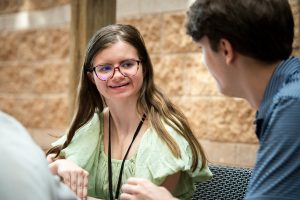 To develop auditory closure skills, children need to fill in missing information or make sense of incomplete auditory stimuli. Developing auditory closure skills can greatly enhance an individual’s ability to understand and comprehend spoken language. Imagine you are having a conversation with a friend in a noisy café. Due to the background noise, you miss a few words that your friend says. But with strong auditory closure skills, your brain can infer the missing information based on the context and seamlessly understand the entire conversation.
In a classroom, the speaker might have a soft voice, making it difficult to hear every word clearly. However, if you have well-developed auditory closure skills, you can fill in the gaps and piece together the speaker’s message by paying attention to the context, tone, and body language.
Let’s say you are listening to a podcast or an audio story. Sometimes, the audio might skip or have brief interruptions, causing you to miss a sentence or two. But with well-honed auditory closure skills, you can mentally reconstruct the missing content, ensuring that the flow and comprehension of the story are not disrupted.
Practitioners can encourage children to practice auditory closure skills by listening to incomplete words, completing sentences and listening to stories with missing parts. Provide children with a list of words where some letters are missing so they can practice listening to incomplete words. For example, “h_p,” “c_t,” “d_g.” Ask children to identify and say the complete word by filling in the missing letters. This exercise trains their ability to recognize familiar word patterns and make sense of the sound they hear.
Another idea is to give children incomplete sentences and ask them to fill in the missing words. For example, “The dog chased the __ ,” “I like to eat __for breakfast,” “The sun is __. ” Encourage children to use their knowledge of context and meaning to guess the missing words and complete the sentences correctly.
Read a short story to a child but deliberately skip some parts or replace words with similar-sounding ones. After reading, ask the child to retell the story and fill in the missing details. This activity trains their attention to context and helps them infer the missing information based on what they heard.
Click here for Part 2 to learn strategies for focusing on a specific sound despite background noise.
Jennifer Shell lives in Texas. An educator of the deaf for 20+years, she also has a genetic hearing loss. She is the Deaf Educator for the Hill Country Special Education Co-op servicing the rural districts of Doss ISD, Harper ISD, Comfort ISD, and Fredericksburg ISD.
Desarrollo de habilidades para compensar una pérdida auditiva y desenvolverse con éxito
El desarrollo de los sonidos del habla es fundamental para la fluidez de la lectura oral y la inteligibilidad del habla. Trabajar con un Especialista en Escucha y Lenguaje Hablado (LSLS) en varias tareas auditivas, como asociación auditiva, discriminación auditiva, memoria auditiva y cierre auditivo, así como tareas de discriminación figura-fondo auditiva, puede ayudar a reforzar las estrategias para desarrollar las habilidades de escucha. Estas habilidades son importantes para que las personas con pérdida auditiva desarrollen las habilidades necesarias para mejorar su fluidez oral y la inteligibilidad del habla.
¿Por dónde empezar para conseguir el mayor impacto posible? Para desarrollar estas habilidades auditivas, es preciso entender en qué consisten. A continuación, exploraremos diversas actividades para perfeccionarlas.
La Asociación auditiva es la capacidad de relacionar sonidos con sus significados o similitudes. Nos ayuda a establecer conexiones entre distintos sonidos y a comprender su significado. Por ejemplo, cuando oímos el sonido de un timbre, lo asociamos con la idea de que las clases están a punto de empezar o de que hay alguien en la puerta de nuestra casa.
La Discriminación auditiva se refiere a la capacidad de distinguir entre diferentes sonidos. Nos permite reconocer e identificar las diferencias de tono, volumen, duración y calidad de los sonidos. Por ejemplo, cuando escuchamos diferentes notas musicales, podemos discriminar entre un sonido agudo y un sonido grave.
La asociación auditiva y la discriminación auditiva son habilidades necesarias para entrenar el cerebro de una persona en tareas de discriminación figura-fondo auditiva (se tratarán en detalle en la Parte 2). Aprendemos a ignorar lo que no es importante en nuestro entorno auditivo y a centrarnos en lo que sí lo es. Por ejemplo, ignorar el segundero de un reloj, pero escuchar al maestro en clase. Escuchar es una tarea cerebral y aprendemos a ignorar la información que no es importante y a centrarnos en la que sí lo es, principalmente a través de la forma en que nuestro cerebro asocia y discrimina los distintos sonidos.
¿Cómo puede una persona con sordera o hipoacusia practicar estas habilidades?
Para desarrollar las habilidades de asociación auditiva, los profesionales pueden fomentar la escucha activa, crear asociaciones de sonidos mediante la repetición y utilizar estrategias de aprendizaje multisensorial/ensayos verbales, como leer en voz alta mientras se oye la grabación de un cuento o cantar mientras suena una canción en la radio. La escucha activa significa centrarse en la persona que habla o en la fuente de sonido y prestar atención a los detalles. Se deben fomentar actividades que requieran una escucha activa, como la escucha de audiolibros o la participación en discusiones grupales o en juegos de escucha.
Por ejemplo, se le puede pedir al niño(a) que escuche un clip de audio e identifique sonidos o palabras concretas. Con esta práctica se le ayudará a mejorar su capacidad de asociar sonidos con significados específicos. Se puede ayudar a los niños con sordera o hipoacusia a que establezcan asociaciones de sonidos dando un paseo de escucha o creando un libro de experiencias donde puedan practicar la creación de conexiones mentales entre los sonidos y sus significados, por ejemplo, el ladrido de un perro con la palabra «guau» o el sonido de un timbre con la idea de que alguien se encuentra en la puerta de casa. Con este proceso se reforzarán las habilidades de asociación auditiva al vincular los sonidos con sus correspondientes asociaciones o conceptos.
La utilización simultánea de varios sentidos permite mejorar las habilidades de asociación auditiva. Por ejemplo, los niños pueden leer mientras escuchan grabaciones de audio o participar en juegos educativos que impliquen relacionar sonidos con imágenes. Este enfoque multisensorial refuerza la conexión entre los sonidos y los conceptos relacionados, lo que facilita que los niños desarrollen y retengan asociaciones auditivas. También se trabaja en el bucle de retroalimentación del niño(a) y le permite autocorregirse cuando lee en voz alta si comete errores.
Para desarrollar la capacidad de discriminación auditiva, primero hay que ser capaz de identificar sonidos similares como singularmente diferentes para poder discriminarlos entre sí. De esta manera se pueden reconocer y diferenciar sonidos como palabras, letras, tonos (lo agudo o grave que es un sonido) y timbres. La adquisición de unas buenas habilidades de discriminación auditiva es importante para escuchar, desarrollar el lenguaje y comunicarse con eficacia.
La discriminación auditiva se puede practicar de varias maneras a través de sonidos ambientales, palabras y música. Los sonidos ambientales se pueden practicar presentando a los niños grabaciones de distintos sonidos ambientales, como el canto de un pájaro, el motor de un automóvil o el timbre de una puerta. Se les debe indicar que identifiquen y etiqueten cada sonido que escuchen. Con este ejercicio se les ayudará a diferenciar los distintos sonidos del entorno cotidiano y a reforzar sus habilidades de discriminación auditiva.
Por ejemplo, se le puede pedir al niño(a) que escuche pares de palabras, por ejemplo, «cosa» y «casa», y que indique si suenan parecidas o diferentes. Con este ejercicio se ayuda a que los niños se centren en los sonidos específicos dentro de las palabras y a que desarrollen la capacidad de discriminarlos. La música es otra forma de que los niños practiquen las habilidades de discriminación de tonos. Se pueden tocar melodías breves con un instrumento musical y pedir al niño(a) que identifique si las notas que suenan son iguales o diferentes. Por ejemplo, toque una secuencia de notas como C-D-E y, a continuación, toque C-D-C. El niño(a) debe determinar si las secuencias de notas tienen o no un sonido idéntico. Con esta actividad se desarrollan las habilidades de discriminación auditiva para reconocer diferentes tonos musicales.
La Memoria auditiva es la capacidad de retener y recordar los sonidos que oímos. Nos permite recordar y reconocer sonidos familiares, como la melodía de una canción favorita. Utilizamos la memoria auditiva cuando queremos recordar el número de teléfono de alguien o la letra de una canción. Es una habilidad importante que nos ayuda en varios aspectos de nuestra vida cotidiana, como seguir instrucciones, recordar detalles importantes y participar en conversaciones.
El Cierre auditivo se refiere a la capacidad de nuestro cerebro de completar la información que falte o esté fragmentada en un mensaje auditivo basándose en pistas contextuales y en los conocimientos previos. Nos permite entender el significado global de una frase o una conversación hablada, incluso cuando algunas palabras o sonidos no estén claros o no se oigan correctamente; es la capacidad de completar la información que falte o las lagunas en los sonidos; y nos permite entender palabras o frases incluso cuando algunas partes no se oigan con claridad. Por ejemplo, si alguien dice «Me g_stan los helados», podemos utilizar nuestras habilidades de cierre auditivo para entender que la letra que falta es una «u» y que la palabra es «gustan».
La memoria auditiva y las habilidades de cierre auditivo son extremadamente importantes para el desarrollo del lenguaje y la lectoescritura, por ejemplo, cuando se utilizan mnemónicos para recordar información importante como «Ra A Vaav» (rojo, anaranjado, amarillo, verde, azul, añil, violeta) para recordar el orden de los colores del arco iris.
Las habilidades de cierre auditivo también son importantes para desarrollar el vocabulario, la fluidez y el procesamiento de la información cuando no se oye todo el mensaje con la claridad suficiente para discriminar las palabras. Por ejemplo, cuando alguien habla desde otra habitación y se oyen partes de una frase, pero no todas las palabras, y sin embargo se es capaz de «deducir» o dilucidar el significado sin que la otra persona tenga que repetirlo.
¿Cómo puede una persona con sordera o hipoacusia practicar estas habilidades?
Para desarrollar las habilidades de memoria auditiva, hay que poner en práctica tareas que fomenten la escucha activa, la repetición y la síntesis, la asociación y la mnemotecnia. Un hito clave en esta destreza es cuando el niño(a) empieza a aprender a través de experiencias fortuitas en lugar de recibir información auditiva de forma explícita. Cuando alguien hable, es importante escuchar activamente y prestar atención a lo que diga. Hay que centrarse en las palabras, el tono y cualquier pista verbal que ayude a recordar la información. Intente visualizar en la mente el contenido del habla, por ejemplo, creando una imagen mental o haciendo dibujos. Después de oír algo, practique repitiendo la información internamente o resumiéndola con sus propias palabras. De esta manera se reforzará el recuerdo y se consolidará la información en la mente. El ensayo verbal, el resumen, la paráfrasis y la reestructuración ayudan a conseguirlo.
Por ejemplo, un amigo le cuenta una película que vio el fin de semana. Después de escucharla, repita el argumento o resuma la historia principal con sus propias palabras. De esta forma, podrá recordar más fácilmente los detalles clave. También puede reformular lo que haya oído y verificar que el contenido es correcto. Cree asociaciones o conexiones memorables entre lo que oiga y lo que ya sepa. También se pueden utilizar estrategias de mnemotecnia, como acrónimos, rimas o canciones, para ayudar a recordar información, como el mnemónico «Ra A Vaav» de los colores del arco iris.
Para desarrollar habilidades de cierre auditivo, los niños deben completar la información que falte o dar sentido a los estímulos auditivos incompletos. El desarrollo de las habilidades de cierre auditivo puede mejorar enormemente la capacidad de una persona de entender y comprender el lenguaje hablado. Imagine que mantiene una conversación con un amigo en una cafetería ruidosa. Debido al ruido de fondo, no puede oír algunas de las palabras. Sin embargo, con unas buenas habilidades de cierre auditivo, su cerebro deducirá la información que falte basándose en el contexto y entender perfectamente toda la conversación.
En una clase, la persona que hable puede hacerlo con un tono muy bajo, lo que dificultará que se oigan todas las palabras con claridad. No obstante, si se tienen unas habilidades de cierre auditivo bien desarrolladas, se podrán rellenar las lagunas y reconstruir el mensaje prestando atención al contexto, al tono y al lenguaje corporal.
Supongamos que está escuchando un podcast o un audiolibro. En ocasiones, el audio puede sufrir saltos o breves interrupciones por lo que no oirá bien alguna frase. Sin embargo, con unas habilidades de cierre auditivo bien desarrolladas, podrá reconstruir mentalmente el contenido que falte, de manera que no se interrumpirá el flujo ni la comprensión del relato.
Los profesionales pueden animar a los niños a que practiquen las habilidades de cierre auditivo escuchando palabras incompletas, completando frases y escuchando relatos a los que les falten partes. Facilite a los niños una lista de palabras en las que falten algunas letras para que puedan practicar la escucha de palabras incompletas. Por ejemplo, «v_n», «l_s», «c_n». Indique a los niños que identifiquen y digan la palabra completa rellenando las letras que falten. Con este ejercicio se entrenará su capacidad de reconocer patrones de palabras familiares y dar sentido al sonido que oyen.
Otra idea es facilitar a los niños frases incompletas y pedirles que completen las palabras que falten. Por ejemplo: «El perro persiguió al __», «Me gusta desayunar __», «El sol __». Anime a los niños a que utilicen sus conocimientos del contexto y el significado para adivinar las palabras que falten y completar las frases correctamente.
Lea un cuento corto a un niño(a), pero sáltese deliberadamente algunas partes o sustituya algunas palabras por otras que suenen parecido. Tras la lectura, indíquele que reproduzca el relato y complete los detalles que falten. Con esta actividad se entrenará su atención al contexto y le ayudará a deducir la información que falte basándose en lo que haya oído.
Haga clic aquí para acceder a la Parte 2 y aprender estrategias para centrarse en un sonido específico a pesar del ruido de fondo.
Jennifer Shell reside en Texas. Es educadora de sordos desde hace más de 20 años y tiene una pérdida auditiva genética. Es la educadora de sordos de la cooperativa Hill Country Special Education Co-op que atiende a los distritos rurales de Doss ISD, Harper ISD, Comfort ISD y Fredericksburg ISD.
