
As children begin the new school year, it’s important to think about how to set them up for success. Consider preparing for the school year like training for a sport. Just as athletes practice and set goals to improve their skills, students who are deaf and hard of hearing (DHH) need to prepare, set academic goals, and communicate with teachers (a.k.a. coaches) to ensure a successful year. Here are some tips specifically for students who are DHH and their parents to consider before the new school year begins:
Organize School Supplies and Necessities: Start by gathering all school supplies, like notebooks and pens, as well as any technology used (e.g. FM, DM, or SoundField systems). Keep supplies organized so the student can find them easily. If the student works with a tutor or a support teacher, have a place for items that the student would like to review or revisit with them.
For example: Use a binder with sections for each subject. Label them clearly so you or your child knows where to find everything.
Set Goals: Students should think about what they want to achieve this school year. Setting both academic and personal goals can help students stay focused. I encourage my DHH students to make both listening, language, and advocacy goals at the beginning of each school year. That way, we can coordinate our efforts to make sure progress is made throughout the year.
For example: Your child might set a goal to ask at least one clarifying question during each class period or decide to join a club that interests him or her in order to practice socializing with peers.
Communicate with Teachers: Students and their families should request time to meet with the child’s teachers early in the school year. Let the teacher know about the students’ needs and preferences for successful communication, or encourage your child to discuss this with their teachers independently. This is also a great time to review your current IEP with your teachers, especially if your annual ARD meeting doesn’t fall during the beginning of the school calendar. It is during this time that I encourage my DHH students and their parents to review any accommodations they may need in order to have access to the curriculum in the general education setting.
For example: If your child requires close notes during lectures, utilizes a DM system, or needs to see subtitles/captions when videos are presented, let the teacher know or encourage your child to, so they can provide these accommodations to you from the beginning.
Learn About Available Resources: Students should be familiar with the resources available at the school, such as support services or clubs for DHH students. Depending on the academic setting, be sure to know who the “Go To” people are for 504/DHH/itinerant/special education support. Most schools have specific personnel designated to provide support services regardless of whether services are received in a self-contained or mainstream placement
For example: Find out if your school has a DHH program or a counselor who understands your child’s needs and can review the current accommodations with you, your child, and the new teachers.
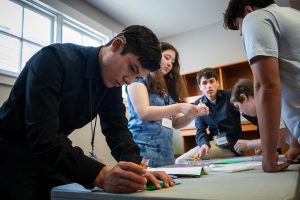 Practice Self-Advocacy: Students should be encouraged to express his or her needs. If something isn’t working or if your child needs help, let your child know not to hesitate to ask. Teachers want DHH students to be successful, but they need to know when they’re having difficulties. Students should speak up confidently if something isn’t working for them.
For example: If your teacher forgets to unmute their microphone transmitter, encourage them to do so. Many of my middle and high school students have hand signals (placing a hand behind their ear or pointing to their chest) they use during class to remind teachers to mute or unmute their microphone systems.
Connect with Peers: Building relationships with classmates can enhance the school experience. Encourage students to reach out to friends or join groups where he or she can meet new people. I encourage my students to form peer study groups or develop a buddy system to ensure they have accurate notes and have a way to frequently check in with peers as well as with their teachers.
For example: Students can join a club or sports team and then form a study group with teammates, so he or she also have a study group where they learn together and hold each other accountable.
The school year can feel like a maze. Students who are DHH may face some barriers that others do not, such as missing auditory cues. Using visual aids and technology is like having a map that shows the best routes to take. By asking questions and forming study groups, they can find shortcuts and overcome obstacles, ultimately reaching their goal more easily.
Once the school year begins, it is important to consider including the following behaviors while in the classroom:
- Request Visual Aids: For some classes, it may be helpful to request that the teacher provides visual materials like charts, graphs, and written instructions. I.e., if a teacher is explaining a science experiment, having a step-by-step visual guide can help you follow along more easily.
- Ask Questions: Students must know: “If you don’t understand something, don’t just sit there.” If a student is confused about any concept being covered in class, they should feel comfortable raising their hand to ask for clarification. Confidently ask questions when you don’t understand something or need clarification.
- Participate Actively: Encourage students to get involved during class discussions. For instance, if the class is reading a book together, remind students to share their thoughts and opinions. This active participation helps reinforce learning.
- Utilize Technology: Wear hearing technology! Use apps or devices that assist in communication. If the student has a DM system, remind them to use it! In other instances, a speech-to-text app can help convert spoken words into text during lectures, making it easier for students to follow along.
- Form Study Groups: Collaborate with classmates. Students can form study groups to review material before a test, allowing opportunities for them to learn from each other and clarify any misunderstandings.
- Communicate with Teachers: Students should regularly check in with their teachers about needs and accommodations. If they need a seating adjustment in order to better see the board or hear discussions, they should feel comfortable discussing this with their teacher.
- Practice Self-Advocacy: Advocate, advocate, advocate! Students must feel confident to ask for what they need. Students should express needs and preferences within the classroom. I.e., if you prefer captions during video lessons, communicate this to your teachers.
Stay tuned to Volta Voices for more great back-to-school articles and tips this month!
Jennifer Shell lives in Texas. An educator of the deaf for 20+years, she also has a genetic hearing loss. She is the Deaf Educator for the Hill Country Special Education Co-op servicing the rural districts of Doss ISD, Harper ISD, Comfort ISD, and Fredericksburg ISD.
Preparativos para el nuevo curso escolar: consejos para desenvolverse con éxito
Con el nuevo curso escolar a la vuelta de la esquina, es importante pensar en cómo preparar a los alumnos para que se desenvuelvan con éxito. Los preparativos para el nuevo curso escolar se pueden considerar como un entrenamiento deportivo. Al igual que los deportistas practican y se fijan metas para mejorar sus habilidades, los alumnos con sordera e hipoacusia necesitan prepararse, fijarse metas académicas y comunicarse con los maestros (es decir, los entrenadores) para desenvolverse con éxito en el curso. A continuación, se facilitan algunos consejos para los alumnos con sordera/hipoacusia y sus padres que hay tener en cuenta antes de que comience el nuevo curso escolar:
Organizar los materiales escolares y considerar las necesidades: Empiece por reunir todos los materiales escolares, como cuadernos y bolígrafos, así como cualquier tecnología que se utilice (p. ej., sistemas FM, DM o SoundField). Mantenga los materiales organizados para que el alumno(a) los pueda encontrar con facilidad. Si trabaja con un tutor o un maestro de apoyo, disponga un lugar específico para los materiales que vaya a repasar con la persona en cuestión.
Por ejemplo: Utilice una carpeta con secciones para cada asignatura. Etiquételas claramente para que tanto usted como su hijo(a) sepan dónde encontrar cada cosa.
Fijarse metas: Los alumnos se deben plantear lo que desean lograr en el nuevo curso escolar. Fijarse metas académicas y personales sirve para que no se dispersen. Al comienzo de cada curso escolar, animo a mis alumnos con sordera/hipoacusia a que se fijen metas de escucha, lenguaje y defensa de los propios intereses. De esta manera, podemos coordinar los esfuerzos para asegurarnos de que se logren avances a lo largo del curso.
Por ejemplo: su hijo/a) se podría fijar la meta de plantear al menos una pregunta de aclaración durante cada clase o unirse a un club que le interese para practicar la socialización con sus compañeros.
Comunicarse con los maestros: Los alumnos y sus familias deben solicitar una reunión con el maestro del niño(a) al comienzo del curso escolar. La finalidad es que el maestro conozca sus necesidades y preferencias para que exista una buena comunicación. Otra opción es animar al niño(a) a que tome la iniciativa y se encargue de esta tarea. Además, es un buen momento para revisar su PEI vigente, especialmente si la reunión anual del comité ARD no tiene lugar al inicio del curso escolar. También aprovecho para animar a mis alumnos con sordera/hipoacusia y a sus padres a que revisen cualquier adaptación que puedan necesitar para tener acceso al plan de estudios en el entorno de la educación ordinaria.
Por ejemplo: si su hijo(a) necesita apuntes completos durante las clases, utiliza un sistema de comunicación digital (DM) o necesita que los subtítulos estén activados cuando se presenten videos, informe al maestro o anime al niño(a) a que lo haga, de manera que pueda disponer de estas adaptaciones desde el principio.
Informarse de los recursos disponibles: Los alumnos deben familiarizarse con los recursos disponibles en la escuela, como los servicios de apoyo o los clubes para alumnos con sordera/hipoacusia. Dependiendo del entorno académico, procure saber quiénes son las personas a las que debe acudir para obtener apoyo en materia del plan 504, sordera/hipoacusia, educación especial o itinerante. La mayoría de las escuelas cuenta con personal específico designado para estos servicios, independientemente de que el apoyo sea en un entorno inclusivo o uno ordinario.
Por ejemplo: averigüe si la escuela dispone de un programa para alumnos con sordera/hipoacusia o un orientador que comprenda las necesidades de su hijo(a) y pueda revisar las adaptaciones actuales con usted, el niño(a) y los nuevos maestros.
Practicar la defensa de los propios intereses: Se debe animar a los alumnos a que expresen sus necesidades. Si algo no funciona o necesitan ayuda, tienen que saber que no deben dudar en pedirla. Los maestros desean que los alumnos con sordera/hipoacusia se desenvuelvan con éxito, pero necesitan saber cuándo tienen dificultades. Los alumnos deben expresarse con confianza si algo no marcha como debiera.
Por ejemplo: Si el maestro se olvida de activar el transmisor de micrófono, será necesario recordárselo. Muchos de mis alumnos de secundaria y preparatoria utilizan señales con la mano (como llevarla detrás de la oreja o señalarse el pecho) para recordar al maestro silenciar o activar su sistema de micrófono.
Conectarse con sus compañeros: Establecer relaciones con los compañeros de clase puede mejorar la experiencia escolar. Anime a los alumnos a relacionarse con sus amigos o a unirse a grupos en los que puedan conocer a gente nueva. En mi caso, animo a los alumnos a formar grupos de estudio o crear un sistema de compañeros para asegurarse de que disponen de apuntes precisos y un medio de comunicación frecuente con compañeros y maestros.
Por ejemplo: Los alumnos se pueden unir a un club o equipo deportivo y luego formar un grupo de estudio con los compañeros de equipo, de modo que también tengan un espacio de aprendizaje y responsabilidad compartida.
El curso escolar puede parecer un laberinto. Los alumnos con sordera/hipoacusia se pueden enfrentar a algunas barreras que otros no tienen, como la pérdida de señales auditivas. El uso de ayudas visuales y tecnología es como tener un mapa que muestra las mejores rutas a seguir. Haciendo preguntas y formando grupos de estudio, pueden encontrar atajos, superar obstáculos y alcanzar sus metas con mayor facilidad.
Una vez iniciado el curso escolar, es importante considerar la inclusión de los siguientes comportamientos en el aula:
- Solicitar ayudas visuales: Para algunas clases, puede ser útil solicitar al maestro que facilite materiales visuales como tablas, gráficos e instrucciones escritas. Por ejemplo, si un maestro está explicando un experimento de ciencias, disponer de una guía visual paso a paso facilita el seguimiento.
- Hacer preguntas: Los alumnos deben saber que: «Si no entiendes algo, no te quedes callado». Cuando no comprendan algún concepto tratado en clase, deben sentirse cómodos levantando la mano para pedir una aclaración. Deben hacer preguntas con confianza cuando no entiendan algo o necesiten una aclaración.
- Participar activamente: Anime a los alumnos a que participen en los debates de clase. Por ejemplo, si en la clase se está leyendo un libro, recuerde a los alumnos que pueden compartir sus pensamientos y opiniones. Esta participación refuerza el aprendizaje.
- Utilizar la tecnología: ¡Utilice la tecnología auditiva! Existen aplicaciones o dispositivos que sirven de ayuda para comunicarse. Si el alumno(a) dispone de un sistema DM, ¡se le debe recordar que lo utilice! En otros casos, una aplicación de transcripción de voz a texto puede convertir las palabras habladas en texto durante las clases, facilitando el seguimiento.
- Formar grupos de estudio: El alumno(a) debe colaborar con los compañeros de clase. Los alumnos pueden formar grupos de estudio para repasar el material antes de un examen, lo que les brinda la oportunidad de aprender unos de otros y aclarar cualquier malentendido.
- Comunicarse con los maestros: Los alumnos deben revisar periódicamente con los maestros sus necesidades y adaptaciones. Si necesitan un cambio de asiento para ver mejor la pizarra o escuchar los debates, deben sentirse cómodos solicitándolo.
- Practicar la defensa de los propios intereses: ¡Deben defender siempre sus propios intereses! Los alumnos se deben sentir seguros para pedir lo que necesiten. Deben expresar sus necesidades y preferencias en el aula. Por ejemplo, si prefieren subtítulos durante las lecciones en video, no deben dudar en decírselo al maestro.
¡Siga visitando Voces de Volta para acceder a más artículos y consejos interesantes sobre la «vuelta a las clases» este mes!
Jennifer Shell reside en Texas. Es educadora de sordos desde hace más de 20 años y tiene una pérdida auditiva genética. Es la educadora de sordos de la cooperativa Hill Country Special Education Co-op que atiende a los distritos rurales de Doss ISD, Harper ISD, Comfort ISD y Fredericksburg ISD.
