
World Hearing Day is on March 3, the same day as Alexander Graham Bell’s birthday, which is quite fitting. For those who know the life and work of Alexander Graham Bell intimately, the data and trends of Listening and Spoken Language development today are not much different from Bell’s own work 135 years ago.
Bell passionately sought to educate teachers of the deaf on how to help children with hearing loss use their residual hearing. We see much of that same passion and drive in today’s Listening and Spoken Language Specialists. In Bell’s own words, “The child listens and listens, until a model is established in the mind. Then the child commences to imitate, not elementary sounds, but whole words.”
The principles of that statement still apply to the development of Listening and Spoken Language today, but now, many children are identified and fitted with hearing technology in infancy and move from learning to listen to the development of spontaneous speech and language quickly. How exciting it would have been for Dr. Bell to converse with the children, teens and adults of this century!
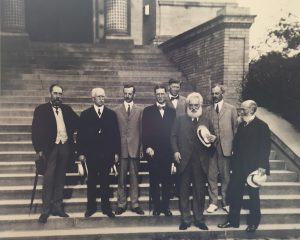
Bell was just as passionate about helping teachers as he was about the children themselves. His goal was not just to build listening and language skills but to help the child participate fully in mainstream society, living and working independently.
In conversations with Bell’s family, it was clear that although he made great contributions to the modern telecommunications and scientific world, he really had a passion for helping children who were deaf. “He wanted to help children become educated and self-reliant adults. And help enable them to fully participate in mainstream society,” said Sara Grosvenor, Bell’s great, great granddaughter.
“Bell’s goal was to prevent isolation. To enable deaf individuals to learn to communicate and participate fully in society the way hearing people do,” said Jim Watson, Bell’s great, great grandson.
Bell himself was an extraordinary man, with ideas well ahead of his time. “I think one of the things that’s important to who Bell was as a person is that his interests involved things like challenges that the world is going to be facing in the future. He was talking about greenhouse gas, alternative fuels, recycling and access to clean drinking water…so he was really a humanist,” said Watson.
“He had a wonderful sense of humor,” noted Grosvenor. “His impishness and his willingness to consider ideas in the name of science were key. It’s just very important that he had an open mind.”
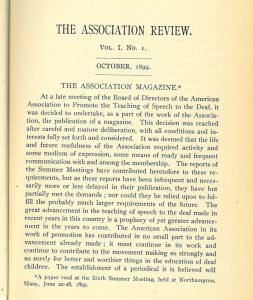 As the association dedicated to continuing his work, the Alexander Graham Bell Association for the Deaf and Hard of Hearing will be celebrating our 135th anniversary throughout 2026…A truly remarkable accomplishment. For an association to adapt and survive this long is a true testament to its founder’s vision and ability to inspire generation after generation.
Mabel and Alec: “The Girl for Whom the Telephone was Invented”
By Lisa A. Goldstein
Eleanor Roosevelt’s well-known quote, “Behind every great man is a great woman,” applies well to Alexander Graham Bell and his wife, Mabel. Often eclipsed by her famous husband, she had her own accomplishments and is responsible for much of his success. And they would not have met if not for her hearing loss.
Mabel Gardiner Hubbard was born in Cambridge, Mass., in 1857 to wealthy parents. After almost dying from scarlet fever, she became deaf at the age of 5. Thankfully, her parents didn’t pay attention to the widespread belief that she wouldn’t be able to speak. Her mother found tutors to teach her to lipread and talk. As a result, the highly intelligent Mabel was essentially mainstreamed.
Mabel attended schools in the United States and Europe. Her father then hired Alexander Graham Bell to assist with articulation as he was known as the best tutor for the deaf in Boston. She was 15 and he was 25. Although not love at first sight, their continued professional partnership eventually led to love and they married several years later.
Working with Mabel and others with hearing loss is what piqued Bell’s interest in acoustics and sound wave transmission. This, of course, led to the invention of the telephone. He even wrote on the back of a picture of Mabel: “The girl for whom the telephone was invented.” In fact, the two married only a few days after the Bell Telephone Company was established in 1877 and had four children: two boys who died in infancy, and two girls, Elsie and Marian, who was known as Daisy.
The couple split their time between Washington, D.C., where Bell worked at AG Bell’s historic headquarters The Volta Bureau, and their family home in Nova Scotia, Canada.
Alexander Graham Bell: un legado que perdura
El Día Mundial de la Audición se celebra el 3 de marzo, una coincidencia significativa con el aniversario del nacimiento de Alexander Graham Bell. Quienes conocen a fondo su vida y su obra señalan que los datos y tendencias actuales sobre el desarrollo de la Escucha y el Lenguaje Hablado apenas difieren de los planteamientos del Dr. Bell hace 135 años.
El Dr. Bell promovió activamente que los profesores de sordos adquirieran formación sobre la manera de ayudar a los niños con pérdida auditiva a utilizar su audición residual. Este mismo entusiasmo y determinación se observan en los Especialistas de Escucha y Lenguaje Hablado. En palabras del Dr. Bell: «El niño escucha y escucha, hasta que se establece un modelo en la mente. Entonces, comienza a imitar, no sonidos elementales, sino palabras completas».
Los principios de esta afirmación siguen siendo aplicables en el desarrollo de la Escucha y el Lenguaje Hablado, si bien en la actualidad se identifica y equipa con tecnología auditiva a numerosos niños en la infancia, que pasan con rapidez de aprender a escuchar al desarrollo espontáneo del habla y el lenguaje. ¡Qué emocionante habría sido para el Dr. Bell conversar con los niños, adolescentes y adultos de este siglo!
Al Dr. Bell le apasionaba tanto ayudar a los maestros como a los propios niños. Su objetivo no era únicamente el desarrollo de las habilidades de escucha y lenguaje, sino ayudar a los niños a participar plenamente en la sociedad, viviendo y trabajando de una manera independiente.
En conversaciones con la familia del Dr. Bell, era evidente que, si bien realizó grandes contribuciones al mundo moderno de las telecomunicaciones y la ciencia, su verdadera pasión era ayudar a los niños con sordera. «Quería ayudar a los niños a convertirse en adultos formados y autosuficientes. Y ayudarles a participar plenamente en la sociedad», asegura Sara Grosvenor, tataranieta del Dr. Bell.
«Su objetivo era evitar el aislamiento. Deseaba capacitar a las personas con sordera a que aprendiesen a comunicarse y participasen plenamente en la sociedad, al igual que las personas con una audición normal», afirma Jim Watson, tataranieto del Dr. Bell.
El propio Dr. Bell era un hombre extraordinario, con ideas muy adelantadas a su época. «Creo que uno de los rasgos más importantes para conocer cómo era el Dr. Bell como persona es que sus intereses implicaban retos a los que el mundo se enfrentará en el futuro. Hablaba de las emisiones de gases de efecto invernadero, los combustibles alternativos, el reciclaje y el acceso al agua potable… se puede decir que era realmente un humanista», añade Jim.
«Tenía un gran sentido del humor», destaca Sara. «Su espíritu curioso y su disposición a considerar ideas en nombre de la ciencia fueron fundamentales. Hay que destacar que tenía una mente abierta».
Como asociación dedicada a continuar su labor, la Alexander Graham Bell Association for the Deaf and Hard of Hearing celebrará su 135 º aniversario a lo largo de 2026… Un logro verdaderamente notable. Que una asociación se haya adaptado y sobrevivido durante tanto tiempo es una prueba fehaciente de la visión y la capacidad de su fundador para inspirar a generación tras generación.
Mabel y Alec: «La joven para quien se inventó el teléfono»
Por Lisa A. Goldstein
La conocida cita de Eleanor Roosevelt, «Detrás de todo gran hombre hay una gran mujer», se aplica perfectamente a Alexander Graham Bell y a su esposa, Mabel. A menudo eclipsada por su famoso esposo, alcanzó sus propios logros y es responsable de una gran parte de su éxito. Y no se habrían conocido de no ser por su pérdida auditiva.
Mabel Gardiner Hubbard nació en Cambridge, Massachusetts, en 1857, en el seno de una familia acomodada. Tras estar a punto de morir de escarlatina, se quedó sorda cuando tenía 5 años. Afortunadamente, sus padres no compartían la creencia generalizada de que no podría hablar. Su madre contrató a tutores para que le enseñaran a leer los labios y a hablar. El resultado fue que Mabel, que además tenía una gran inteligencia, se educó básicamente en el sistema educativo ordinario.
Mabel estudió en centros educativos estadounidenses y europeos. Posteriormente, su padre contrataría a Alexander Graham Bell para que le ayudase con la pronunciación, ya que tenía fama de ser el mejor tutor de personas con sordera de Boston. Ella tenía 15 años y él 25. Aunque no fuera un amor a primera vista, su continua relación profesional acabó convirtiéndose en amor y se casaron algunos años después
El trabajo con Mabel y otras personas con pérdida auditiva despertó el interés del Dr. Bell por la acústica y la transmisión de ondas sonoras, lo que le llevaría a inventar el teléfono. Incluso escribió en el dorso de una fotografía de Mabel: «La joven para quien se inventó el teléfono». De hecho, la pareja se casó unos días después de la creación de la Bell Telephone Company en 1877 y tuvieron cuatro hijos: dos niños que murieron en la infancia y dos niñas, Elsie y Marian, a la que llamaban Daisy.
La pareja dividía su tiempo entre Washington D. C., donde el Dr. Bell trabajaba en la sede histórica de AG Bell, The Volta Bureau, y su residencia familiar en Nueva Escocia, Canadá.
