
The 21st Winter Deaflympics – which will take place in Innsbruck-Seefeld-Tirol, Austria, from January 15-24, 2027 – will include some athletes who use Listening and Spoken Language (LSL). In fact, contrary to popular opinion and social media, participants do not have to identify as culturally Deaf or use American Sign Language (ASL); they only need a hearing loss of 55 dB or greater in the better ear to participate as a Deaflympic athlete.
The US Deaf Ski & Snowboard Association (USDSSA) selected two brothers, Witt and Jace Williams, to represent the country in alpine skiing. They grew up using LSL and wear hearing aids; one received a cochlear implant last year. Many of the ice hockey players have similar backgrounds, as hockey has benefited from programs like the Stan Mikita Hockey School for the Deaf and Hard of Hearing.
Jace Williams: Alpine Skiing
This won’t be the first Deaflympics for Jace Williams, 31, based in Helena, Montana. He competed in Russia in 2015, while his brother, Witt, competed in Italy in 2019. Jace was diagnosed with a severe bilateral hearing loss around age 2, at which point he started wearing bilateral hearing aids. Now he has a left cochlear implant and right hearing aid.
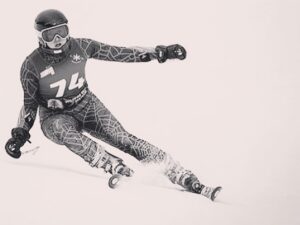
Two was a monumental year for Jace; he started skiing then too. He shifted to competitive skiing over a decade later. His sport is alpine skiing, which is the art of elite level ski competition with events like downhill, super giant slalom (super-G), giant slalom (GS), and slalom. As Jace explains, downhill and super-G are “high speed events with jumps/bumps, rollers, lots of terrain changes, and big turns, whereas giant slalom and slalom are more medium or quicker paced turns with panels for giant slalom and tall poles for slalom that are typically cross blocked with hands/shins.”
Jace discovered the Deaflympics through his pole-vaulting coach, Bill Hurford, who encouraged him to compete. One thing about the Deaflympics is wearing hearing devices is not allowed and all alerts are visual. Hurford had Jace explore different balance exercises along with vestibular/inner ear balance training with his eyes closed to enhance his body’s awareness. “Training with both hearing devices on and off helps navigate your body’s response with hearing skis on the ice or feeling the skis turn on certain snow conditions,” Jace says.
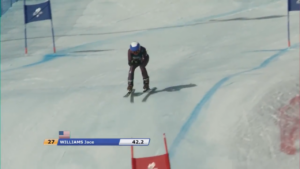 Prior to participating in the Deaflympics, the only accommodations Jace had were the start judges doing a tap countdown or having a beeper count down. The 2015 Deaflympics were one of the best experiences for Jace as a person and athlete. “I still have friends I stay in touch with to this day that I met over 11 years ago at my first Deaflympics,” he says. “The experience also taught me that there are communities, cultures, and other people with similar challenges that I face back home that can help me embrace my hearing loss.”
Garrett Gintoli: Ice Hockey
Garrett Gintoli, 30, will be competing in his third Deaflympics with the U.S. ice hockey team. His first experience was in 2015, where his hockey team won Bronze. They went on to win Gold in 2019. Garrett has a moderate-severe hearing loss; he was diagnosed shortly after birth with Melnick-Fraser Syndrome (also known as Branchio-Oto-Renal syndrome). His mother, sister, and brother have the same condition. He wears hearing aids in both ears.
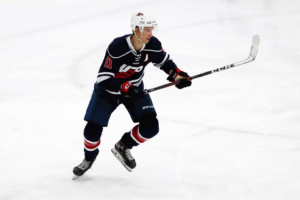 Garrett started playing hockey as soon as he could walk. His older siblings were all playing by the time he was born, so they wasted no time in letting him join in on the fun. When he was 6, he attended the Stan Mikita School for the Deaf and Hard of Hearing (AHIHA) in the Chicago area. “That was my first experience playing on a deaf hockey team, and I loved it instantly,” Garrett recalls. “I left the week-long camp in tears because I enjoyed playing with other deaf kids so much, I didn’t want to leave.”
AHIHA is where Garrett found out about the Deaflympics. Most, if not all, members of the Deaflympic team have attended the camp at some point. “It became a natural desire to play on the team when seeing the older players at the camp with their USA gear on,” Garrett says.
Garrett was more relieved than surprised when he found out he could participate in the Deaflympics despite not being Deaf or knowing ASL. “Having a hearing loss and not knowing ASL can leave you in this middle ground between the general public and the Deaf community where you’re not really a part of either side,” he says. “To be able to meet the qualification requirements provides some sense of justification to any struggles or barriers faced due to my particular level of hearing loss.”
The greatest accommodation throughout competitions and training outside of deaf hockey has always been Garrett’s teammates, who understood his hearing loss and were willing to fill him in on things he missed. Since a hockey rink environment has a lot of extraneous noises, Garrett knew if he could have a face-to-face conversation where he could read lips, he’d have a good chance to communicate. Alas, this can only really happen on the bench or waiting in line for a drill to start during practice.
When it comes to in-game communication, Garrett tried to adapt his playing style to be more visual, since he knew he couldn’t rely on his hearing. A trick he learned is to look into the glass around the rink to see the reflection of where his teammates are. “When a puck is along the boards, you’re usually approaching it with your back to the play, making it difficult to know where to move the puck when you get to it,” Garrett says. “A quick look into the glass to locate your nearest teammate is much more dependable than trying to listen for them to call for the puck.”
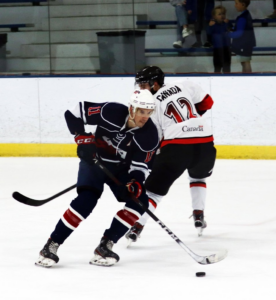 Playing in the Deaflympics was an adjustment for Garrett, because the restriction on hearing devices impacts the ambient sounds of the game. He was used to hearing skates on the ice, pucks hitting the boards, and his stick hitting the puck. All these sounds were muted during his first Deaflympics event, and it made his thoughts seem louder. He also occasionally felt sleepy, likely because his body associates removing his hearing aids with bedtime. Now he spends a few weeks before any Deaflympics event practicing without his hearing devices, so he’s more prepared.
While some of Garrett’s older Deaflympic teammates have been playing together since they were kids at AHIHA over 20 years ago, some of the younger guys at the camp he helped when he was a teenager, and they were just beginners, are now his teammates. There will also be some new faces, but Garrett says it usually doesn’t take long to establish a good connection as a group.
Naturally, his views on hearing loss have changed significantly since playing on a deaf team. “I have been very grateful for my hearing loss presenting the opportunity to represent my country and to have a special connection with a group of people who love the same game as I do and live in a similar world outside of the game,” he says. “It has also given me perspective seeing guys who have more severe losses than me navigate the game in their own way. I feel very fortunate to have that experience as it has been inspiring to learn different stories and grow as a person.”
These events are not just about athletes competing, Garrett emphasizes; it’s about recognizing the kids who felt like they couldn’t play sports because of their hearing loss or for the kids who might have been bullied out of the sport for being deaf. It’s about honoring the kids who had coaches and teammates cast them aside because it would be too much work to accommodate them. “I hope this event and future events can inspire more deaf/hard of hearing people to feel confident that they can join a sport and belong,” he adds.
Follow Jace and Garrett on their Deaflympic journey @usdeafskiandsnowboard and @ahihaorg.
Redefiniendo los deportes de invierno para deportistas con pérdida auditiva
Los 21.º Juegos Olímpicos de Invierno para Sordos (Deaflympics), que se celebrarán en Innsbruck-Seefeld-Tirol (Austria) del 15 al 24 de enero de 2027, contarán con la participación de algunos deportistas que utilizan la Escucha y el Lenguaje Hablado (LSL, por sus siglas en inglés). De hecho, contrariamente a lo que se suele pensar, los participantes no tienen por qué identificarse como personas sordas ni utilizar la lengua de signos estadounidense (ASL); para competir en los Deaflympics, únicamente necesitan presentar una pérdida auditiva de 55 dB o superior en el mejor oído.
La US Deaf Ski & Snowboard Association (USDSSA, Asociación de Esquí y Snowboard para Sordos de EE. UU.) ha seleccionado a dos hermanos, Witt y Jace Williams, para representar al país en esquí alpino. Ambos crecieron utilizando el enfoque LSL y llevan audífonos; uno de ellos recibió un implante coclear el año pasado. Muchos de los jugadores de hockey sobre hielo tienen trayectorias similares, ya que este deporte se ha beneficiado de programas como la Stan Mikita School for the Deaf and Hard of Hearing.
Jace Williams: esquí alpino
Estos no serán los primeros Deaflympics para Jace Williams, de 31 años, residente en Helena, Montana. Compitió en Rusia en 2015, mientras que su hermano Witt participó en los celebrados en Italia en 2019. A Jace le diagnosticaron una pérdida auditiva bilateral severa cuando tenía dos años, edad a la que empezó a utilizar audífonos en ambos oídos. Ahora lleva un implante coclear en el oído izquierdo y un audífono en el derecho.
Los dos años fueron una etapa decisiva para Jace: también fue entonces cuando empezó a esquiar. Más de una década después dio el salto al esquí de competición. Su especialidad es el esquí alpino, una disciplina que engloba pruebas de competición de alto nivel como el descenso, el supergigante (super-G), el eslalon gigante (GS) y el eslalon. Como explica Jace, el descenso y el supergigante son «pruebas de alta velocidad con saltos, baches, ondulaciones, numerosos cambios de terreno y curvas amplias. En cambio, el eslalon gigante y el eslalon tienen giros de ritmo medio o más rápido, con paneles en el eslalon gigante y postes altos en el eslalon, que normalmente se sortean pasando con manos/espinillas».
Jace descubrió los Deaflympics gracias a su entrenador de salto con pértiga, Bill Hurford, que lo animó a participar. Una particularidad de estos juegos es que no se permite utilizar dispositivos auditivos y todas las señales de aviso son visuales. Hurford animó a Jace a que hiciera distintos ejercicios de equilibrio, además de entrenamiento vestibular y del oído interno, con los ojos cerrados, para mejorar la conciencia corporal. «Entrenar tanto con los dispositivos auditivos puestos como sin ellos ayuda a conocer y controlar la respuesta del cuerpo, al escuchar los esquís sobre el hielo o al percibir cómo giran en determinadas condiciones de nieve», explica Jace.
Antes de participar en los Deaflympics, las únicas adaptaciones que había necesitado eran que los jueces de salida realizaran una cuenta atrás mediante toques o utilizaran un dispositivo sonoro para marcar el inicio. Los Deaflympics de 2015 fueron una de las mejores experiencias de su vida, tanto a nivel personal como deportivo. «Todavía mantengo el contacto con amigos que conocí hace más de 11 años en mis primeros Deaflympics», cuenta. «Aquella experiencia también me enseñó que existen comunidades, culturas y otras personas que se enfrentan a dificultades similares a las que yo vivo en mi día a día y que pueden ayudarme a aceptar y valorar mi pérdida auditiva».
Garrett Gintoli: hockey sobre hielo
Garrett Gintoli, de 30 años, participará por tercera vez en los Deaflympics con la selección estadounidense de hockey sobre hielo. Su primera participación fue en 2015, cuando su equipo consiguió la medalla de bronce. En 2019 lograron la medalla de oro. Garrett tiene una pérdida auditiva de moderada a severa. Poco después de nacer, le diagnosticaron el síndrome de Melnick-Fraser, también conocido como síndrome branquio-oto-renal. Su madre, su hermana y su hermano presentan la misma afección. Utiliza audífonos en ambos oídos.
Garrett empezó a jugar al hockey en cuanto aprendió a andar. Cuando nació, sus hermanos mayores ya jugaban, así que no tardaron en dejar que se uniera a la diversión. A los 6 años asistió a la Stan Mikita School for the Deaf and Hard of Hearing (AHIHA), en la zona de Chicago. «Fue mi primera experiencia jugando en un equipo de hockey de personas sordas y me encantó desde el primer momento», recuerda Garrett. «Me fui del campamento de una semana llorando, porque había disfrutado tanto jugando con otros niños sordos que no quería irme».
Fue en la AHIHA donde Garrett conoció los Deaflympics. La mayoría de los miembros del equipo sordolímpico, si no todos, han pasado por el campamento en algún momento. «Al ver a los jugadores mayores en el campamento con su equipación de EE. UU., surgió de forma natural el deseo de jugar en el equipo», explica.
Cuando descubrió que podía participar en los Deaflympics a pesar de no identificarse como persona sorda ni conocer la lengua de signos estadounidense (ASL), sintió más alivio que sorpresa. «Tener una pérdida auditiva y no conocer ASL puede situarte en una especie de tierra de nadie entre la población general y la comunidad sorda, sin sentir que formas parte de ninguno de los dos grupos», afirma. «Poder cumplir los requisitos de clasificación aporta cierta sensación de reconocimiento a todas las dificultades o barreras a las que me he enfrentado por mi grado concreto de pérdida auditiva».
En las competiciones y los entrenamientos de hockey fuera del ámbito del hockey para personas sordas, la principal adaptación con la que ha contado Garrett siempre han sido sus propios compañeros de equipo. Ellos comprendían su pérdida auditiva y estaban dispuestos a ponerlo al día sobre cualquier información que se hubiera perdido. Como una pista de hockey sobre hielo es un entorno con numerosos ruidos de fondo, Garrett sabía que, si podía mantener una conversación cara a cara y leer los labios, tendría muchas posibilidades de comunicarse eficazmente. Sin embargo, esto solo suele ser posible en el banquillo o mientras espera en la fila a que comience un ejercicio durante los entrenamientos.
En cuanto a la comunicación durante los partidos, Garrett intentó adaptar su estilo de juego para depender más de la información visual, ya que sabía que no podía confiar en su audición. Uno de los trucos que aprendió fue mirar el cristal que rodea la pista para ver el reflejo de la posición de sus compañeros. «Cuando el disco está junto a las bandas, normalmente te acercas a él de espaldas a la jugada, por lo que resulta difícil saber hacia dónde debes dirigirlo cuando llegas hasta él», explica Garrett. «Echar un vistazo rápido al cristal para localizar al compañero más cercano es mucho más fiable que intentar oír cómo te pide el disco».
Participar en los Deaflympics supuso un periodo de adaptación para Garrett, ya que la prohibición de utilizar dispositivos auditivos cambia la percepción de los sonidos ambientales. Estaba acostumbrado a oír el sonido de los patines sobre el hielo, los discos golpeando las bandas y su propio stick al golpear el disco. Durante su primera participación en los Deaflympics, todos estos sonidos desaparecieron o quedaron amortiguados, lo que hacía que sus propios pensamientos parecieran mucho más intensos. En ocasiones, también sentía somnolencia, probablemente porque su cuerpo asociaba quitarse los audífonos con la hora de dormir. Ahora, unas semanas antes de cada competición de los Deaflympics, dedica tiempo a entrenar sin sus dispositivos auditivos para llegar mejor preparado.
Mientras que algunos de sus compañeros más veteranos llevan jugando juntos desde que eran niños en AHIHA, hace más de 20 años, algunos de los jugadores más jóvenes a los que Garrett ayudó durante el campamento, cuando él era adolescente y ellos apenas empezaban, son ahora sus compañeros de equipo. También habrá caras nuevas, pero Garrett explica que normalmente no se tarda mucho en establecer una buena conexión como grupo.
Como es lógico, su forma de ver la pérdida auditiva ha cambiado mucho desde que juega en un equipo de personas sordas. «Estoy muy agradecido de que mi pérdida auditiva me haya brindado la oportunidad de representar a mi país y de establecer una conexión especial con un grupo de personas a las que les apasiona el mismo deporte que a mí y que viven en un mundo parecido fuera de la pista», afirma. «También me ha permitido ampliar mi perspectiva al ver cómo jugadores con pérdidas más severas que la mía se desenvuelven en el juego a su manera. Me considero muy afortunado de haber vivido esta experiencia, porque conocer diferentes historias ha sido una fuente de inspiración y me ha ayudado a crecer como persona».
Garrett destaca que estos eventos no se centran únicamente en la competición deportiva. También buscan dar visibilidad a los niños que sentían que no podían practicar deporte debido a su pérdida auditiva, o a aquellos que quizá sufrieron acoso y acabaron abandonando una disciplina deportiva por ser sordos. Se trata de reconocer también a los niños cuyos entrenadores y compañeros los dejaron de lado porque consideraban que realizar las adaptaciones necesarias supondría demasiado trabajo. «Espero que este evento y los que se celebren en el futuro inspiren a más personas con sordera o hipoacusia a sentirse seguras de que pueden incorporarse a un deporte y encontrar en él su lugar», añade.
¡Sigue a Jace y Garrett en su camino hacia los Deaflympics @usdeafskiandsnowboard y @ahihaorg!
