
Leah and Sophie Salzberg received cochlear implants three years ago. Not only are they thriving, but they inspired their mother, Jessica, to start a company, Heart of Hearing, to help other families.
A Shocking Diagnosis
The girls, who are profoundly deaf, are the eldest children in their family of six. They had typical hearing at birth and passed the newborn hearing screening test. There was no reason for concern until Leah was about 2 1/2 years old. That’s when Jessica noticed a delay in her speech development and started her in speech therapy. However, Leah wasn’t engaged during these sessions. Looking back, this isn’t surprising because the therapists were wearing masks as it was during COVID.
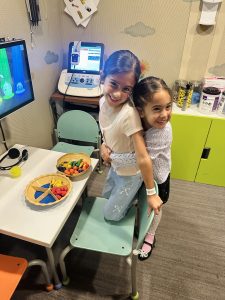 At the same time, Jessica and her husband Matt noticed Leah wasn’t always responding when they called her name, especially in loud environments with a lot of background noise. They made an appointment with an ENT, who believed Leah had fluid in her ears, like many children.
“After a few months had passed, I knew in my heart that there was more to it than that,” Jessica recalls. “I strongly pushed to get Leah an auditory brain response (ABR) test so we could have some answers.”
After two-and-a-half hours of a sedated ABR test, the audiologist diagnosed Leah with moderate-to-severe sensorineural hearing loss. Jessica and Matt (and the audiologist) were shocked, given the foundation of language and speech development Leah had.
“As devastated and heartbroken as we were, we put plans into place and were as proactive as we could be,” Jessica says. Leah was fitted with hearing aids, which they call “super ears,” and began wearing them the following week.
Answers to Many Questions
One of the Salzbergs’ follow-up steps to Leah’s diagnosis was to conduct genetic testing to determine any potential causes for the hearing loss and identify any additional complications. Weeks later, the results came in: Leah’s hearing loss was caused by the rare MYO15A gene, an autosomal recessive gene for which both parents are carriers, unbeknownst to them. Each of their children had a 25% chance of having a progressive hearing loss, ultimately ending with the child being deaf in their early years of life.
“As difficult as this was, we finally had answers,” Jessica says.
Armed with this information, appointments were made for Sophie, then 1 1/2 years old. She presented with a similar speech pattern as Leah, so Jessica began to accept that she would likely be diagnosed with hearing loss as well. Indeed, the ABR test confirmed this. Sophie received her “purple sparkly super ears” that week.
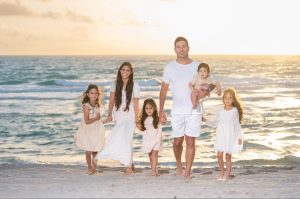 During this time their youngest daughter, Mila, was born and tested at the hospital immediately so the family could best plan and prepare if necessary. Her genetic results showed that she is a carrier of the gene but only has one copy of it instead of two like her sisters. In other words, she will not be affected.
Similarly, their youngest, Noah, also only has just one copy of the gene.
Listening and Spoken Language Journey
In December 2022, Leah and Sophie’s hearing loss continued to progress until they were both within the profound range, making them candidates for cochlear implants. In January 2023, they each underwent bilateral cochlear implant surgery on the same day at the University of Miami (the family lives nearby in Surfside, Fla.). Three weeks later, the sisters were together when their CIs were activated.
Jessica and Matt decided to raise their daughters using Listening and Spoken Language because they were not born deaf—they could hear in the first year or two of their lives. And “they absolutely loved to listen, speak, dance, etc.,” Jessica explains. “We wanted to give our girls all the options that we’re fortunate enough to have.”
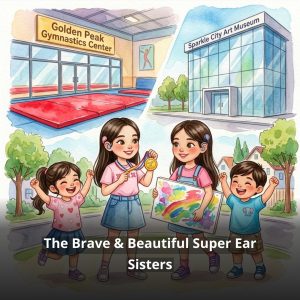 Leah is now in first grade, reading on grade level, and Sophie is 5 1/2 years old, with speech and language skills above her age level. They have received AG Bell scholarships throughout the years, which have supported their progress. Leah has even written a book with Jessica about the girls with their CIs, currently titled The Brave & Beautiful Super Ear Sisters. Jessica is working with a publisher at the moment to see their vision come to life.
Inspiration to Action
Watching Leah and Sophie succeed and thrive every single day “despite the challenge they have of being deaf has proven that with the proper support, any child is capable of reaching his or her utmost potential,” Jessica says.
This is what inspired her to start her company, Heart of Hearing, in January 2026. As an education specialist for over 15 years, Jessica works with families to bridge the gap between educational and emotional needs. She offers her unique, individualized support services to advocate for the child in need. Jessica is passionate about this work to empower families with the tools, confidence, and understanding they need to advocate for their child.
“My approach is rooted in compassion, patience, and collaboration,” Jessica says.
Heart of Hearing offers in-person support services in Miami as well as virtually worldwide. Jessica has already received positive feedback and connected with families all across the globe.
Interested families can contact Jessica at jessicasalzberg@gmail.com or via her Instagram page (where she shares her family’s journey), @heartofhearingjs.
Leah and Sophie may have started their family on an unexpected journey, but Jessica is grateful. “My inspiration always has been, and will forever be my children,” she says. “They are at the heart of everything for me and that’s why I created my company, Heart of Hearing.
Incertidumbre transformada en esperanza y acción
Leah y Sophie Salzberg recibieron implantes cocleares hace tres años. No solo muestran un gran avance, sino que han servido de inspiración a su madre, Jessica, que ha creado una empresa, Heart of Hearing, para ayudar a otras familias.
Un diagnóstico devastador
Las niñas, que tienen sordera profunda, son las mayores de una familia de seis hijos. Al nacer tenían una audición normal y superaron la prueba de cribado auditivo neonatal. No hubo motivo de preocupación hasta que Leah tenía unos dos años y medio. Fue entonces cuando Jessica notó un retraso en el desarrollo del habla y la llevó a terapia de fonoaudiología/logopedia. Sin embargo, Leah no participaba en las sesiones. Echando la vista atrás, no es de extrañar, ya que los terapeutas llevaban mascarillas debido a la COVID.
Por otra parte, Jessica y su marido Matt notaron que Leah no siempre respondía cuando la llamaban por su nombre, especialmente en entornos ruidosos con mucho ruido de fondo. Pidieron cita con un otorrinolaringólogo, quien creyó que Leah tenía líquido en los oídos, como muchos niños.
«Al cabo de unos meses, tuve la convicción interior de que había algo más», recuerda Jessica. «Insistí mucho en que le hicieran a Leah una prueba de potenciales evocados auditivos del tronco cerebral (PEATC) para obtener respuestas más precisas».
Tras dos horas y media de una prueba de PEATC bajo sedación, el audiólogo diagnosticó a Leah una pérdida auditiva neurosensorial de moderada a grave. Jessica y Matt (y el propio audiólogo) se quedaron muy sorprendidos, dado el nivel de desarrollo del lenguaje y el habla que Leah tenía.
«Aunque nos sentíamos devastados y destrozados, pusimos planes en marcha y fuimos todo lo proactivos que pudimos», dice Jessica. Leah recibió audífonos, a los que llaman «superoídos», y empezó a usarlos la semana siguiente.
Respuestas a muchas preguntas
Una de las medidas que tomaron los Salzberg tras el diagnóstico de Leah fue realizar pruebas genéticas para determinar las posibles causas de la pérdida auditiva e identificar cualquier complicación adicional. Semanas más tarde, llegaron los resultados: la pérdida auditiva de Leah estaba causada por el gen raro MYO15A, un gen autosómico recesivo del que ambos progenitores eran portadores sin saberlo. Cada uno de sus hijos tenía un 25 % de probabilidades de desarrollar una pérdida auditiva progresiva, que acabaría por dejar al niño sordo en sus primeros años de vida.
«Por muy difícil que fuera, por fin teníamos respuestas», afirma Jessica.
Con esta información, se concertaron citas para Sophie, que entonces tenía un año y medio. Presentaba un patrón de habla similar al de Leah, por lo que Jessica empezó a aceptar que probablemente también le diagnosticarían pérdida auditiva. De hecho, la prueba de PEATC lo confirmó. Sophie recibió sus «superoídos morados brillantes» esa misma semana.
Durante este tiempo nació su hija menor, Mila, a quien se le realizaron pruebas en el hospital de inmediato para que la familia pudiera planificar y prepararse lo mejor posible en caso de que fuera necesario. Sus resultados genéticos mostraron que es portadora del gen, pero que solo tiene una copia del mismo en lugar de dos como sus hermanas. En otras palabras, no se verá afectada.
Del mismo modo, el hijo menor, Noah, también tiene solo una copia del gen.
El camino hacia la Escucha y el Lenguaje Hablado
En diciembre de 2022, la pérdida auditiva de Leah y Sophie siguió avanzando hasta que ambas se situaron en el rango de sordera profunda, lo que las convirtió en candidatas para recibir implantes cocleares. En enero de 2023, ambas se sometieron a una cirugía de implantes cocleares bilaterales el mismo día en la Universidad de Miami (la familia vive cerca, en Surfside, Florida). Tres semanas después, las hermanas estaban juntas cuando se activaron los implantes cocleares.
Jessica y Matt decidieron criar a sus hijas utilizando el método de la Escucha y el Lenguaje Hablado porque no habían nacido con sordera: pudieron oír durante el primer año de vida o incluso el segundo. Y «les encantaba escuchar, hablar, bailar, etc.», explica Jessica. «Queríamos darles a nuestras hijas todas las opciones de las que afortunadamente disponemos».
Leah está ahora en primer curso, lee al nivel de su curso, y Sophie tiene cinco años y medio, con habilidades de habla y lenguaje por encima de su nivel de edad. Han recibido becas de AG Bell a lo largo de los años, lo que ha respaldado su progreso. Leah incluso ha escrito un libro con Jessica sobre las niñas y sus implantes cocleares, titulado The Brave & Beautiful Super Ear Sisters. Jessica trabaja actualmente con una editorial para hacer realidad su visión.
De la inspiración a la acción
Ver cómo Leah y Sophie avanzan cada día «a pesar del reto que supone tener sordera demuestra que, con el apoyo adecuado, cualquier niño es capaz de alcanzar su máximo potencial», asegura Jessica.
Esta fue la inspiración para crear su empresa, Heart of Hearing, en enero de 2026. Como especialista en educación desde hace más de quince años, Jessica trabaja con las familias para salvar la brecha entre las necesidades educativas y emocionales. Ofrece sus servicios de apoyo únicos e individualizados para defender los intereses de los niños que lo necesitan. A Jessica le apasiona este trabajo, cuyo objetivo es dotar a las familias de las herramientas, la confianza y los conocimientos que necesitan para defender los intereses de sus hijos.
«Mi enfoque se basa en la empatía, la paciencia y la colaboración», afirma Jessica.
Heart of Hearing ofrece servicios de apoyo presenciales en Miami, así como de forma virtual en todo el mundo. Jessica ya ha recibido comentarios positivos y ha establecido contacto con familias de todo el mundo.
Las familias interesadas pueden ponerse en contacto con Jessica en jessicasalzberg@gmail.com o a través de su página de Instagram (donde comparte la trayectoria de su familia): @heartofhearingjs.
Es posible que la familia iniciara una trayectoria no prevista, debido a Leah y Sophie, pero Jessica se siente agradecida. «Mi inspiración han sido, y siempre lo serán, mis hijos», añade. «Son el centro de mi vida y por esa razón creé mi empresa, Heart of Hearing».
